
Hockey Fan Jerseys
Hockey jerseys for fans, from international tournament designs to 2026 ballpark hockey-night jerseys.
Hockey is the only sport here where the venue is deliberately kept cold, and it is the only one whose traditional shirt is not called a shirt at all. Both facts come from the same place, and together they explain why hockey apparel is cut and weighted differently from everything else in this section.
The Rink Is Cold Because the Ice Requires It
An ice hockey arena is refrigerated to keep the surface playable, so the seating bowl sits well below normal indoor temperature and it does not warm up as the building fills. This is the opposite of a basketball arena, which is heated. Spectators who dress as they would for any other indoor event are usually cold within twenty minutes, and there is nowhere warmer to go.
It Is Called a Sweater for a Reason
The traditional garment is a sweater, and the name is literal rather than quaint: early players wore actual knitted wool sweaters because the game was played outdoors in winter. Modern versions are lighter, but the weight and coverage conventions survived, which is why a hockey-cut garment feels substantially heavier in the hand than a football or basketball equivalent. If you want that weight in a non-sporting design, the closest thing is an ugly sweater.
Sized to Go Over Layers
Because the venue is cold, hockey garments are traditionally drafted to be worn over something, not next to the skin. Ordering your usual shirt size often produces something that fits fine over a t-shirt and not at all over a hoodie. If you intend to wear it as the outer layer, size up. This is the same reasoning that governs a baseball jacket, and the opposite of a fitted polo shirt.
Shoulder Yokes and Stripe Traditions
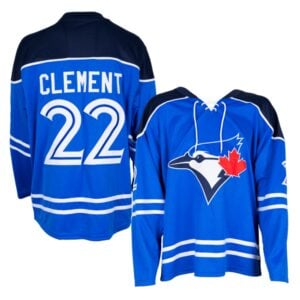
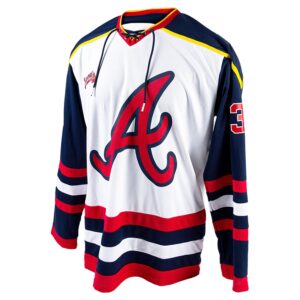
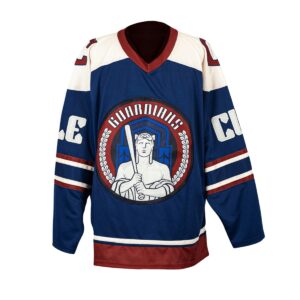
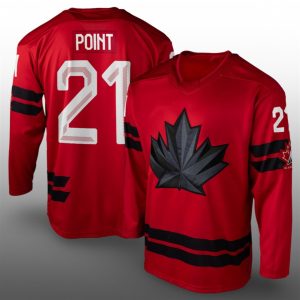
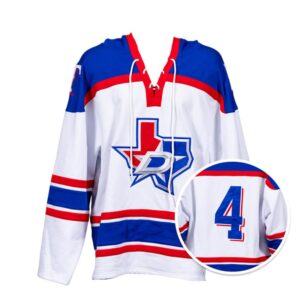
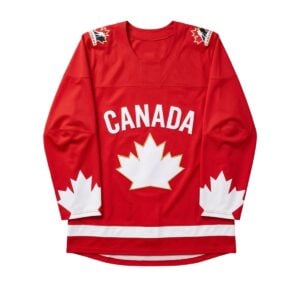
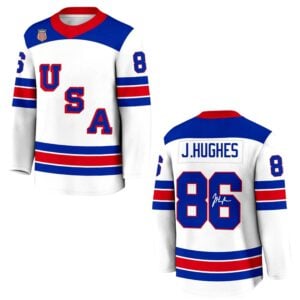
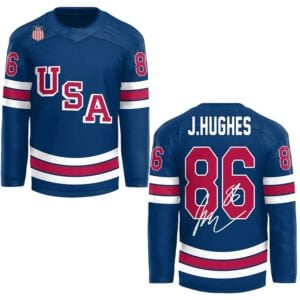
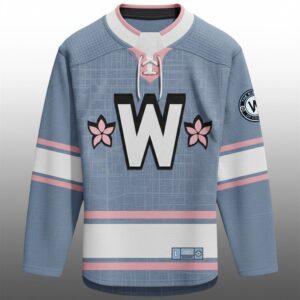
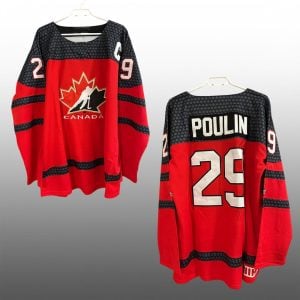
Hockey design conventions are unusually strong: a contrasting shoulder yoke, horizontal stripes at the hem and cuffs, and a crest in the centre chest rather than a print across it. Those bands interrupt any full-body graphic, which is why designs in this category tend to be crest-and-stripe compositions rather than large images. A full front graphic belongs on a graphic tee or a full-coverage cut.
Two Hours Without Warming Up
A game with intervals keeps you in a cold bowl for well over two hours. What works is a warm base, the printed garment over it, and something for the extremities, because hands and head lose heat fastest and no amount of torso layering compensates. A hat is not an accessory at a rink; it is the most useful item you can bring after the sweater itself.
Where This Sits in the Catalogue
Hockey sits with football, basketball and baseball under sports apparel. Winter designs beyond sport are under holiday apparel, and the same cuts without a sporting theme are in the apparel range. Group and event quantities are in stadium giveaways. New designs appear in trending today, and exchanges follow our return and refund policy.
Fashion Trending Top

Fashion Trending Top
Apparel
3D Clothing
FAQ
Well below normal indoor temperature, because the building is refrigerated to keep the ice playable and does not warm up as it fills. Most people who dress for a regular indoor event are cold within twenty minutes.
Because early players wore actual knitted wool sweaters for outdoor winter games. Modern versions are lighter, but the name and the weight conventions both survived.
If it will be your outer layer, yes. Hockey cuts are traditionally drafted to go over something. Your usual size will fit over a t-shirt but often not over a hoodie.
Because the traditional layout uses a contrasting shoulder yoke and horizontal stripes at the hem and cuffs, and those bands interrupt any full-body graphic. A centre-chest crest is the layout that survives them.
Something for your head and hands. Extremities lose heat fastest and no amount of torso layering makes up for it. At a rink a hat is closer to essential than optional.
Usually yes, noticeably so in the hand. The weight and coverage conventions come from the sport's outdoor origins and were never fully abandoned.
No. These are our own hockey-themed prints; no team or league makes or sells them.