
Christmas Ornaments
Christmas ornaments for championship seasons, college rivalries, memorial keepsakes and funny tree decorations.
Every other product in this catalogue is judged by how it behaves in use. An ornament is different: it is on display for perhaps five weeks a year and in storage for the other forty-seven. That ratio is the most important fact about it, and it explains why the things that ruin ornaments have almost nothing to do with the tree.
Storage Is Where Ornaments Are Damaged
Chips, scratches and faded faces overwhelmingly happen in a box in a loft or garage, not on a Christmas tree. Two things cause it: pieces pressed against each other, and attics that get really hot in summer. Wrapping each one and storing them somewhere with a stable temperature does more for their life than anything else. Anyone who has opened a box in December and found a decade-old set looking tired has usually found a storage problem rather than a quality one.
Two Sides, and Only One Faces the Room
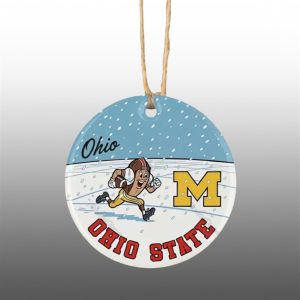
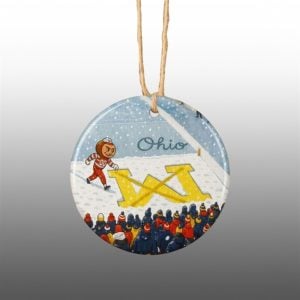
Many printed ornaments carry a design on both faces, and some carry it on one. Neither is wrong, but it changes how you hang them: a single-sided piece needs to be positioned so the printed face is outward, and it will turn if the tree is knocked or a draught catches it. Double-sided pieces are more forgiving on a tree that gets brushed past.
Weight Decides Where It Can Hang
Outer branches are thin and flex, so a heavier ornament placed near the tip will droop or slide. Heavier pieces belong closer to the trunk where branches are stiffer, and light ones can go anywhere. On an artificial tree this matters more than on a real one, because the branch tips are usually more flexible.
Seen Against Lights, Not Against a Wall
An ornament is viewed with bright lights immediately behind and around it, which is an unusual lighting condition. Backlighting washes out low-contrast detail and makes pale designs disappear against a lit background. Designs with strong outlines and darker tones hold up on a lit tree; delicate pale artwork that looks lovely in the hand can vanish once the lights are on.
Bought Yearly, Kept for Decades
Ornaments accumulate rather than get replaced, and many households add a piece a year, so a set assembled over time is deliberately mixed rather than matching. That makes this one of the few categories where buying a single item rather than a set is the normal behaviour, and where dated or commemorative designs are a feature instead of a drawback.
Where This Sits in the Catalogue
Ornaments belong to home and living rather than to clothing, and they sit closest to Christmas apparel in the calendar. They pair with ugly sweaters for the party half of the season and with coffee mugs and a blanket for the quiet half. Other display pieces are posters and canvases. The full occasion range is under holiday apparel. New designs appear in trending today, and exchanges follow our return and refund policy.

Christmas






Home & Living
Home & Living
Home & Living

Home & Living

Christmas

Christmas
FAQ
Usually storage rather than use. Pieces pressed against each other chip and scratch, and lofts get really hot in summer. Wrapping each one and storing somewhere temperature-stable makes the biggest difference.
Some are, some are not. It varies by product. A single-sided piece needs positioning so the printed face is outward, and it can turn if the tree is knocked.
Closer to the trunk, where branches are stiffer. Outer tips flex and a heavy ornament placed there will droop or slide, especially on an artificial tree.
Because lights sit immediately behind and around the ornament. Backlighting washes out low-contrast detail. Strong outlines and darker tones hold up far better under tree lights.
Not necessarily. Most households add a piece a year, so collections are deliberately mixed. Buying single items is normal in this category rather than unusual.
Here they are a feature. Ornaments are kept for decades and often mark a specific year or event, which is the opposite of how a dated design works on clothing.
Individually wrapped, not loose in one box, and stored somewhere that does not swing between extremes of temperature. That single habit prevents most of the damage people blame on quality.