
Baseball & Varsity Jackets
Baseball jackets and varsity jackets for fans, with rivalry, conference championship and founding-year team designs for 2026.
Every other garment in this catalogue is worn against the body. A jacket is worn over whatever you already have on, and that one fact changes how it is cut, how it is sized and where a design can usefully go. Treating a jacket like a heavier shirt is how people end up with something that will not close over a hoodie.
Outerwear Is Sized Over Other Clothes
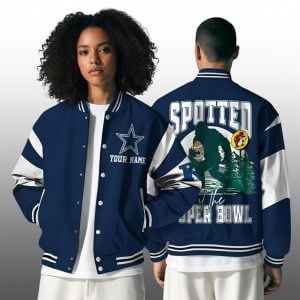
A baseball jacket is drafted with layering room built in, but only so much. If you plan to wear it over a t-shirt, your normal size is right. Over a hoodie or a knit, size up one. This is the opposite instinct to buying a polo shirt, where the cut is deliberately close. Check the chest measurement on the product page against a jacket you already own and like, measured flat and doubled, rather than against your shirt size.
The Back Panel Is the Only Real Billboard
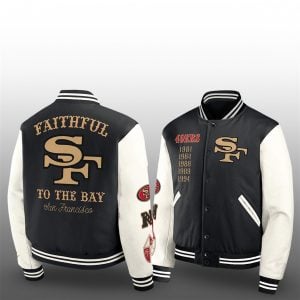
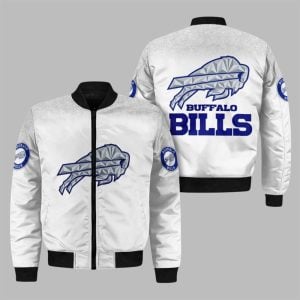
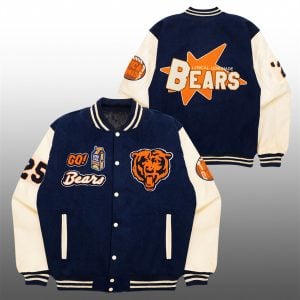
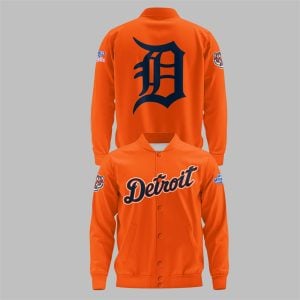
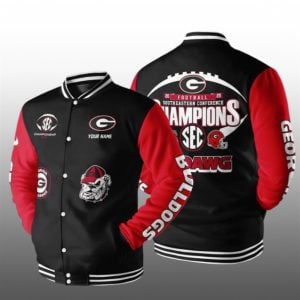
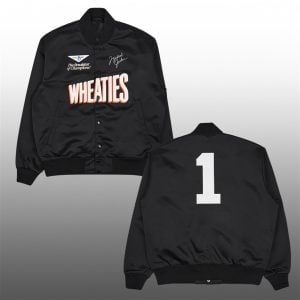
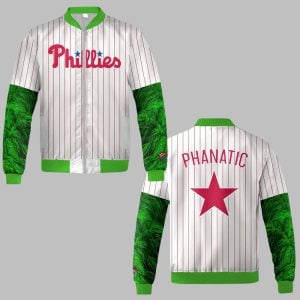
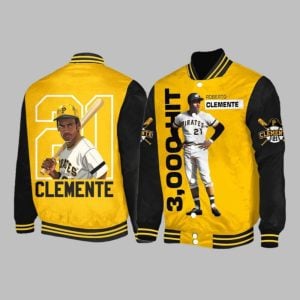
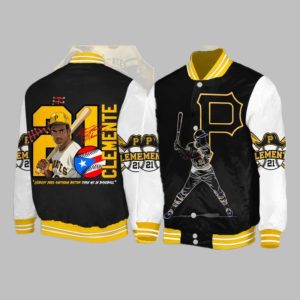
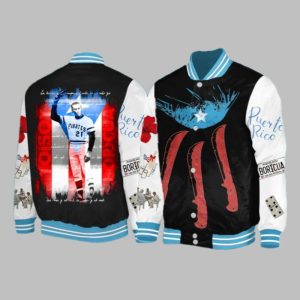
On the bomber and varsity silhouette the front is broken up by a placket, two pockets and often a chest patch, which leaves very little uninterrupted space. The back is one large clean panel and it is where any substantial artwork belongs. Chest designs work but stay small, roughly the size of a badge. Sleeves take stripes, numbers or short text running along the arm, not detailed images. If you want a large front graphic instead, that belongs on a flat-panel graphic tee.
Ribbing at Cuffs, Collar and Hem
The elastic bands at the wrists, neck and waist are a separate rib knit, not the same fabric as the body. They are what makes the jacket sit close at the edges and blouse slightly in the middle, and they are also the parts that wear first. Ribbing does not take print well and is normally left plain or given a simple stripe. When ribbing loses its stretch the jacket stops holding shape, so avoid hot drying, which is what kills elastic fastest.
Snap Placket vs Full Zip
Snaps are the traditional varsity closure. They open and close fast, they look right on the silhouette, and they leave small gaps between each snap, which means a snap-front jacket is not windproof. A full zip closes completely and blocks more wind but breaks any front artwork down the centre line. Neither is better; pick the one that matches how you actually plan to wear it.
Read at Distance, in Motion
A jacket is seen from further away than a shirt, usually outdoors, often on someone walking. That rewards high contrast and simple shapes and punishes fine detail and low-contrast colour pairings. Block lettering, bold outlines and a limited palette carry across a car park. The same logic applies to fan jerseys and to designs in stadium giveaways, where most of the audience is far from the wearer.
Where This Sits in the Catalogue
Jackets are the outer layer of the apparel range. Underneath them sit baseball jerseys, 3D clothing and, in colder months, ugly sweaters. For team and sport-led designs see sports apparel. Accessories that finish the look are hats and slide sandals. New arrivals across every cut appear in trending today. Exchanges are covered by our return and refund policy.
3D Clothing
Fashion Trending Top
3D Clothing

3D Clothing
3D Clothing
3D Clothing
3D Clothing
FAQ
If you will wear it over a t-shirt, yes. Over a hoodie or a knit, size up one. Layering room is built in but it is finite, and the usual complaint is a jacket that will not close over a sweatshirt.
The front is broken up by the placket, pockets and often a chest patch, leaving no clean space. The back is a single large panel, so that is where substantial artwork goes. Front designs stay badge-sized.
No. Snaps leave small gaps between each fastener. A full zip closes completely and blocks more wind, but it splits any front artwork down the centre.
Not well. Those bands are a separate rib knit that stretches and recovers, which distorts a print. They are normally left plain or given a simple stripe.
Keep it out of a hot dryer. Heat is what destroys the elastic in ribbing, and once the ribbing stops recovering the whole jacket loses its shape.
High contrast, bold shapes, limited palette. A jacket is viewed from further away and often in motion, so fine detail and close colour pairings do not read.
Measure a jacket you already own flat across the chest, double that number, and compare it to the measurement on the product page. That is far more reliable than matching your shirt size.