
Doormats & Welcome Mats
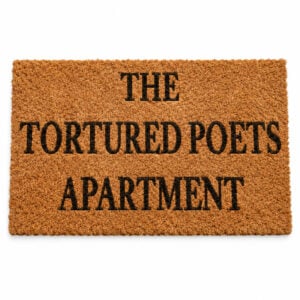
Doormats for fan houses and front porches, with team welcome mats, pop music jokes, pet humor and Halloween designs.
Everything else in this catalogue is protected from wear. A doormat is the opposite: its entire function is to absorb dirt and abrasion so that your floors do not. That makes it the only product here where the design is deliberately placed in harm’s way, and it changes what a reasonable expectation looks like.
Abrasion Is the Whole Design Problem
Shoes carry grit, and grit under a shoe is effectively sandpaper. A printed mat in a busy doorway takes hundreds of passes a week. Designs that hold up are ones with bold shapes and high contrast, because as the surface wears the fine detail goes first while large forms remain readable. Delicate lettering at a small size will become illegible long before the mat itself is worn out.
Sheltered or Exposed Changes Everything
This is the single biggest factor in how long a mat lasts, and most people never consider it. Under a porch or a deep overhang, a mat stays dry, avoids direct sun, and can last for years. Fully exposed to rain and sun, the same mat fades and breaks down in a fraction of the time. Before choosing, look at whether the spot actually gets covered, because that decides which product makes sense rather than which design you prefer.
Coir, Rubber and What Each Is For
Coir is a stiff natural coconut fibre and it is the best surface for physically scraping mud off a boot, but it sheds fibres and does not like staying wet. Rubber and synthetic surfaces hold a print more crisply, clean easily with a hose, and cope with damp far better, but they scrape less aggressively. Neither is better in the abstract: coir for a muddy rural doorway, synthetic for a covered urban entrance.
The Backing Decides Whether It Slides
A mat that moves underfoot is a real trip hazard, particularly on smooth tile or a polished step. A rubber or textured backing grips; a flat woven back on a hard surface will slide. Check what the underside is before deciding where to put it, and avoid loose mats at the top of steps altogether.
It Will Not Look New for Long
Worth saying plainly: a doormat in daily use is a consumable, not a keepsake. Most households replace one every one to three years depending on traffic and exposure, and a faded mat is doing its job rather than failing at it. Buying an expensive mat for a fully exposed high-traffic doorway is usually a worse decision than replacing a modest one more often. Seasonal designs are popular for exactly this reason: they only need to last a season.
Where This Sits in the Catalogue
Doormats belong to home and living as a household item rather than clothing. Seasonal designs line up with Halloween and Christmas, both under holiday apparel. Other display and household pieces include flags, posters and canvases and blankets. New designs appear in trending today, and exchanges follow our return and refund policy.

Home & Living

Home & Living



Fashion Trending Top

FAQ
One to three years in daily use, depending on traffic and exposure. It is a consumable rather than a keepsake, and a faded mat is doing its job rather than failing at it.
Because grit under a shoe acts like sandpaper. Large bold shapes stay readable as the surface wears; small delicate lettering becomes illegible long before the mat itself is finished.
It is the biggest single factor. Under a porch a mat stays dry and out of direct sun and can last years. Fully exposed to rain and sun, the same mat fades in a fraction of the time.
Coir scrapes mud off boots best but sheds fibres and dislikes staying wet. Synthetic holds a print more crisply, hoses clean and copes with damp. Coir for muddy rural doorways, synthetic for covered entrances.
The backing. A rubber or textured underside grips; a flat woven back slides on tile or polished stone. Avoid loose mats at the top of steps entirely.
Shake or beat out the grit regularly, since grit is what does the damage. Synthetic mats can be hosed down. Coir should be kept as dry as possible and never soaked.
For a covered doorway, often yes. For a fully exposed high-traffic entrance, replacing a modest one more often usually works out better.