
3D Clothing — All-Over Print Apparel
All-over print jerseys, shirts and hoodies where the artwork wraps the whole garment, from team-color fan jerseys to full Halloween costume shirts, with fresh designs each week.
On a 3D piece the artwork does not sit on the garment. The garment is made from the artwork. Fabric is printed as a continuous roll first, then cut and sewn, which is why a design carries across shoulders, side seams and sleeves instead of stopping at a rectangle on the chest.
That single production difference decides everything else here: how the piece is cut, which designs suit it, and why no two are identical.
Why the Garment Is the Canvas
A panel-printed shirt is made, then decorated. A 3D piece is decorated, then made. Reversing that order is the only way to keep a pattern unbroken where two pieces of fabric meet.
It carries a consequence most shoppers never consider. Because the pattern pieces are cut from a long printed roll, every garment takes its artwork from a slightly different position along that roll. Two pieces in the same size with the same design will not place the image in exactly the same spot. That is not a fault — it is inherent to the method, and it means the one that arrives is unrepeated.
Which Artwork Survives Full Coverage
Not every design improves when you hand it the whole garment. A pattern emerges after enough of them.
Holds up well: repeating motifs, gradients and skies, dense scenes with depth, dark grounds carrying bright focal points. Anything that still reads when part of it vanishes under an arm or into a fold.
Struggles: fine lettering, a single small emblem, tight symmetry. Text especially — a word that crosses a seam or wraps a sleeve stops being readable, and a logo sized for a chest panel looks lost across a whole torso.
If the design you want is built around words or one small mark, it will serve you better as a panel print in 2D Clothing.
What the Product Photo Cannot Show
Every all-over piece is photographed flat or on a straight-on mockup. Three things are invisible in that view, and all three are worth knowing before you buy.
The sides and sleeves carry design too. A front-facing photo shows perhaps sixty per cent of the artwork. The rest wraps around you and is only visible in motion or from an angle.
Fabric folds change the image. Flat, a pattern is geometric and even. Worn, it curves around the body. Large regular patterns in particular look softer and less rigid in person than on screen.
Seams interrupt at predictable points. Under the arms, along the shoulder, down the sides. The pattern continues across them but there is a visible join — normal on any sewn garment, and the reason we do not print critical detail into those zones.
Choosing Between Our Full-Print Cuts
Several shapes in the range use this same edge-to-edge method. They suit very different occasions.
- Hawaiian Shirt — open collar, relaxed drape. The aloha shirt shape was built for all-over pattern long before printing made it easy, which is why busy designs sit naturally on it.
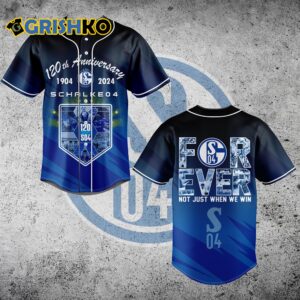
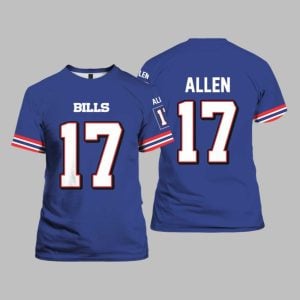
- Baseball Jersey and Jersey — button front, room for a name and number on the back panel.
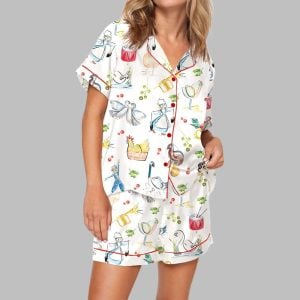
- Pajama — the format where a repeating pattern is most at home, and the easiest full-print piece to wear without thinking about it.
- Bikini Set — the smallest surface, so simple bold patterns beat detailed scenes here.
- Ugly Sweater — knit-effect artwork covering the whole piece, built for December rooms.
Colour, Light and How It Ages
Because the colour is bonded inside the fibre rather than layered on the surface, there is no print film to crack, peel or wash away. Colourfastness on this method is high, and the design fades only at the same pace as the fabric itself.
The one thing that does shorten its life is heat. Synthetic fabric holds heat damage permanently in a way cotton does not, so a hot wash or a hot dryer can distort the weave and dull the colour in a single cycle. Cold water, inside out, hung to dry, no iron on the fabric.
Where This Sits in the Range
The panel-print alternative is 2D Clothing, and the full clothing catalogue sits under Apparel. To browse by design rather than by cut, start at Full Catalog or see this week in Trending Shirts. The same full-coverage printing appears on Blankets and Bedding Sets in Home & Living.
Measurements are on our size chart, delivery windows on Shipping Info, and exchanges under our Return & Refund policy.

3D Clothing

3D Clothing
3D Clothing

3D Clothing
3D Clothing

3D Clothing

3D Clothing

3D Clothing
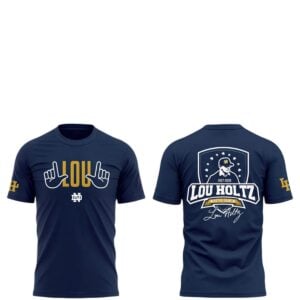
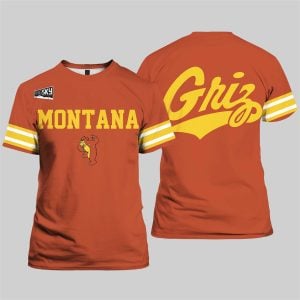
3D Clothing
FAQ
The pattern continues across every seam — that is the whole reason the fabric is printed before the garment is cut. You will still see the join where two panels meet, as on any sewn piece, but the artwork carries through rather than stopping at it.
Pattern pieces are cut from a long printed roll, so each garment picks up its artwork from a slightly different position. Same size, same design, different placement. It is inherent to the method rather than a fault, and it means yours is unrepeated.
Repeating motifs, gradients, dense scenes and dark grounds with bright focal points. Fine lettering and single small emblems struggle — text that wraps a sleeve stops being readable. Word-based designs belong on 2D Clothing instead.
Yes. A straight-on product photo shows roughly sixty per cent of the artwork; the rest wraps around the sides, sleeves and back. That hidden portion is a large part of what you are buying with this cut.
A printed tee is finished first, then decorated on one panel, leaving the rest a solid colour. Here the fabric is printed before cutting, so nothing is left plain. Browse the panel-print alternative in 2D Clothing.
Colour is bonded inside the fibre rather than layered on top, so there is no print film to crack or wash off, and fading tracks the fabric itself. Heat is the real enemy: a hot wash or hot dryer can dull colour and distort the weave permanently.
These are cut from pre-printed fabric, so the fit is fixed at the pattern stage and gives less than a knit tee. Measure a shirt you already own that fits how you want this one to, then match the numbers on our size chart.