
Stadium Giveaways (SGA)
Stadium giveaway (SGA) designs from 2026 theme nights at major and minor league ballparks and arenas: jerseys, hats, shirts, bobbleheads and trading cards.
An SGA piece stops being produced the moment the gates close. Everything that happens to it afterwards — who wants it, what it trades for, whether it turns up again at all — belongs to a market that runs entirely on that one fact. This collection is organised for people buying into that market rather than for people wondering what it is.
How the SGA Market Behaves
Supply is fixed on day one. Demand is not, and the two move in opposite directions from the first pitch onwards.
That asymmetry is the whole economics of the category, and it produces a pattern worth recognising. Interest is flat while a piece is still obtainable, spikes in the weeks after the promotion as people realise they missed it, then settles into a slow floor set by whoever still wants one badly enough. The floor is what matters. A routine player figure settles low. A piece tied to a moment people keep referring to does not settle at all.
The extreme end shows the mechanic clearly. After the Dodgers ran a Shohei Ohtani promotion, examples traded on the secondary market at figures reported between $100 and $2,500 depending on condition and packaging. Most promotions never approach that. But every one of them obeys the same rule about supply ending first.
Which Pieces Hold Their Interest
Four factors do most of the work, and none of them is how good the figure looks.
Whether the moment outlives the roster. A piece marking a milestone, a debut or an anniversary stays legible after the player has moved on. A routine figure of a player mid-contract loses its reference the day he is traded. This is the single biggest divider.
How small the run was. A Minor League Baseball club may hand out a thousand pieces where a major league club hands out fifteen thousand. Smaller runs disappear faster, which is why some of the most chased items in sports memorabilia come from clubs with no national profile at all.
Whether the subject travels. Crossover themes reach beyond the club’s own supporters. A figure that means something to people who have never watched that team has a far wider pool of buyers than one that does not.
Condition. Covered below, and it moves prices more than most first-time buyers expect.
Buying One Piece or Building a Run
These are different purchases and they reward different behaviour.
One piece. You want a specific thing for a specific reason — a player, a night you were at, a gift for someone with a known allegiance. Buy on condition and move when you find it. There is no second production.
A run. Collectors usually pick one axis and stay on it: every piece from one club, every piece of one player across seasons, or a theme that recurs across clubs. Picking an axis early matters more than it sounds, because a collection with a rule is far easier to complete, to display and to value later than a shelf of unrelated figures.
A season. The most demanding version — chasing a full promotional calendar. Rewarding, but understand what you are committing to before the first purchase, because a run with one gap in it behaves like an incomplete set rather than a nearly complete one.
Condition, Grading and What It Costs You
Collectors describe condition in a shorthand worth learning before you buy or sell anything from a giveaway run.
Mint in box means unopened, or opened and returned to its original packaging with inserts intact. Near mint allows minor shelf wear to the box but a flawless piece. Loose means no packaging at all. For the same figure, that spread is frequently the difference between two very different prices.
The reason packaging carries that weight is practical rather than sentimental: the box is how a buyer verifies which promotion a piece came from. Club, date and sponsor are printed on it. Without the box, a figure is just a figure and provenance has to be taken on trust — which is exactly the situation in which any limited edition loses its premium.
Moving a collection. Pack upright, never flat. A figure laid on its side rests the full weight of the head on the spring for the whole journey, and that is how a bobble ends up permanently off-centre.
Formats in This Collection
Not every promotional night produces a figure, and the format changes who the piece suits.
- Bobbleheads — the format the category is built on, boxed and made for display.
- Posters & Canvas — store flat, frame cheaply, and the easiest way to collect a full season without needing shelf space.
- Caps — for wearing rather than shelving, and the only format that suits a matching group.
- Shirts and Jerseys — take the reference back to the next game.
- Mugs, Tumblers and Ornaments — in daily use rather than behind glass.
Non-apparel formats sit under Home & Living; wearables under Apparel.
Where This Sits in the Catalogue
This category covers pieces tied to scheduled promotions. For designs responding to what happened this week instead, see Trending Today. For the complete design library across every product we print, start at Full Catalog, and Holiday is organised by occasion when a date is driving the purchase.
Sizing for wearable formats is on our size chart, delivery on the Shipping Info page, order progress at Track Your Order, and returns under our Return & Refund policy.


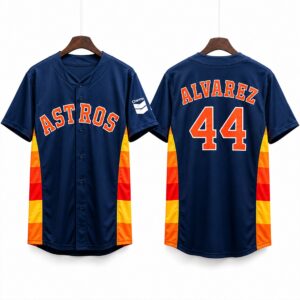
Baseball Jersey


FAQ
Usually condition and packaging first, then the occasion. A milestone or anniversary piece holds interest after the player moves on, while a routine figure loses its reference the day he is traded. Run size matters too — a thousand-piece minor league run behaves differently from a fifteen-thousand major league one.
Pick one axis and stay on it. A collection built to a rule is easier to complete, to display and to value later than a shelf of unrelated pieces. Season runs are the most demanding, because one gap makes the set read as incomplete rather than nearly complete.
Condition grades. Mint in box means the piece sits in original packaging with inserts intact. Near mint allows minor shelf wear to the box but a flawless figure. Loose means no packaging. For the same piece those grades can carry very different prices.
Because it carries the proof. Club, date and sponsor are printed on the packaging, so the box is how a buyer confirms which promotion a piece came from. Without it, provenance has to be taken on trust, and that is where a limited piece loses its premium.
Often more than major league equivalents. Minor league clubs hand out far smaller runs and tend to be more inventive with themes, so pieces disappear faster. Several of the most chased items come from clubs with little national profile.
Pack upright rather than flat, and wrap head and body separately if the original box is gone. A figure laid on its side rests the full weight of the head on the spring for the whole journey, which is how a bobble ends up permanently off-centre.