
Football Fan Shirts for Cold Outdoor Seats
Of the four sports in this section, football is the one where the weather does most of the deciding. The season runs from late summer into midwinter, almost every venue is open to the sky, and you are sitting still for the whole thing. That single fact shapes which garment is worth buying and which one you will regret by the third quarter.
The Season Runs Into the Cold
American football starts in warm weather and finishes in the coldest weeks of the year, so a shirt bought in September is the wrong garment in January. The practical answer is not a heavier shirt but a layered approach: keep the printed piece you want seen as a mid layer, and put something openable over it. A printed baseball jacket does that job because it opens fully without hiding what is underneath.
Why the Number Goes on the Back
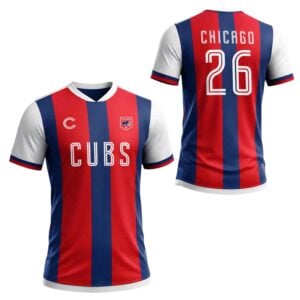
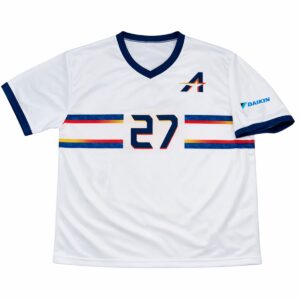
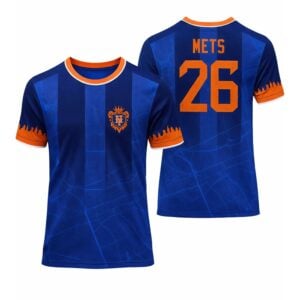
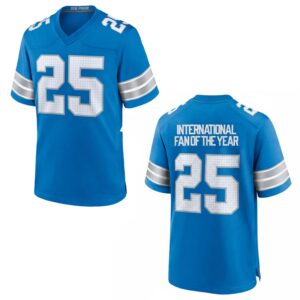
Numbering on the back is not decoration; it exists because officials, commentators and spectators identify players from behind more often than from the front. Fan garments inherit that convention, and it happens to suit the way people actually see you in a stand: from behind and above. If a design has one element that must be read, the upper back is where it survives. The same reasoning drives layout on a printed jersey.
Padded Shoulders Change How a Shirt Hangs
Player kit is cut to sit over shoulder pads, which is why authentic-style cuts look boxy and wide at the top when worn without them. That is a feature if you want the traditional silhouette and a problem if you expected a normal fit. If you want the look without the volume, a standard printed shirt in a football design gives you the graphic without the drafting.
Four Hours in a Fixed Seat
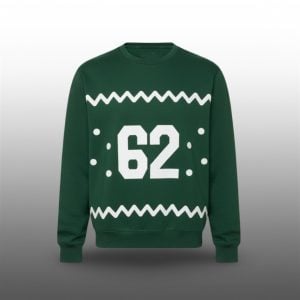
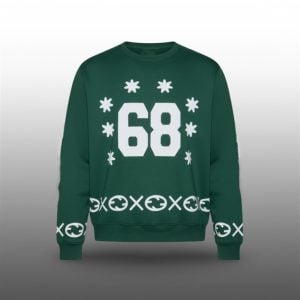
A football fixture with stoppages runs longer than most people plan for, and you cannot leave to change. Two things matter: nothing that itches after an hour, and nothing that traps damp if the weather turns. Cotton is comfortable and slow to dry; blends handle damp better. In deep cold a printed sweater under a jacket is a more effective layer than a second shirt.
Everyday Wear, Not Just Game Day
Most football apparel is worn far more often away from a stadium than at one. For that use the priorities invert: fine detail becomes visible and worth having, weather stops mattering, and a quieter design ages better than a loud one. A printed polo or a printed hat signals allegiance in places where a full jersey would be too much.
Where This Sits in the Catalogue
Football sits alongside basketball, baseball and hockey under sports apparel. Traditional cut shirts are in baseball jerseys, and the same cuts without a sporting theme are in the apparel range. Group and event quantities are handled in stadium giveaways. New designs appear in trending today, and exchanges follow our return and refund policy.
Fashion Trending Top
Fashion Trending Top
Home & Living
Apparel
FAQ
Layers rather than one heavy garment. Keep the printed piece as a mid layer so it stays visible, and put an openable jacket over the top so you can adjust as the temperature drops through the game.
Because player kit is drafted to fit over shoulder pads. Worn without pads it reads boxy. That is the traditional silhouette; if you want the graphic without the volume, pick a standard printed shirt instead.
The upper back. In a stand people mostly see you from behind and above, which is also why player numbering has always sat there.
Cotton is more comfortable but slow to dry, so it holds damp if the weather turns. A blend handles moisture better. For a four-hour outdoor game in poor weather the blend is the safer choice.
For many people, yes. A printed polo or a hat signals the same allegiance in an office, a supermarket or a restaurant where a full jersey would look out of place.
No. These are our own football-themed prints rather than club-issued kit. Official product should be bought from the club or an authorised retailer.
Very little. At stand distances only bold shapes and strong contrast read. Fine detail is worth paying for when the garment will mostly be worn away from the venue.