
Sports
The Comeback King: How Patrick Mahomes is Shattering Recovery Expectations for a Historic 2026 Return

May
In the unpredictable, high-stakes realm of the National Football League, timelines dictate everything. From the game clock to the play clock, to the grueling months of the offseason, time is the ultimate arbiter of success. But if there is one player in modern football history who has consistently proven his ability to bend time to his will, it is Kansas City Chiefs quarterback Patrick Mahomes.
When news of Mahomes’ significant injury broke, a collective silence fell over Chiefs Kingdom. The initial prognosis suggested a grueling, agonizingly slow rehabilitation process that threatened to sideline the face of the NFL well into the late stages of the 2026 season. Pundits began drafting obituaries for the Chiefs’ immediate dynasty hopes, and rival fanbases quietly breathed a sigh of relief.
However, they all made one fatal miscalculation: they underestimated the otherworldly resilience of No. 15.
Recent reports echoing out of Kansas City have sent shockwaves throughout the league. Patrick Mahomes is not just hitting his rehabilitation milestones; he is obliterating them. Pushing aggressively ahead of schedule, the Chiefs star is currently on a trajectory that could see him return to the gridiron far sooner than any medical professional initially dared to predict.
This is the inside story of Patrick Mahomes’ remarkable recovery, the cutting-edge science behind his rehabilitation, and what his imminent return means for the Kansas City Chiefs and the entire NFL landscape in 2026.
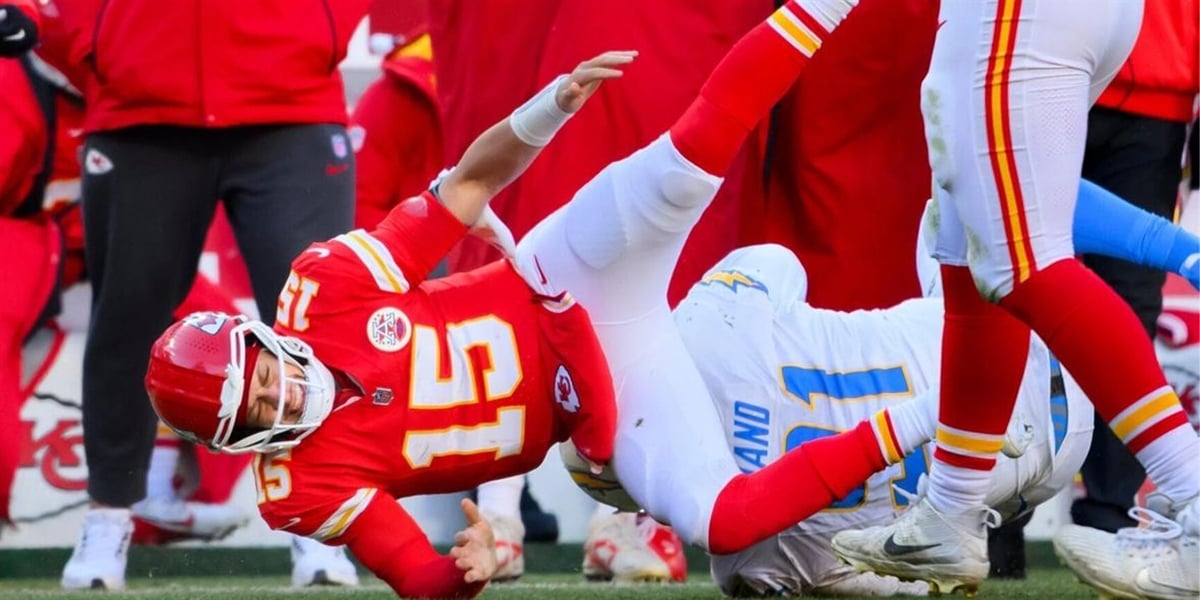
The Setback That Shook Chiefs Kingdom
To understand the magnitude of this recovery, we must first look back at the moment that stopped the football world in its tracks. Whenever a generational talent goes down, the impact transcends the local fanbase—it alters the ecosystem of the entire league.
When Mahomes suffered his injury, the optics were grim. The stadium fell silent, and the immediate post-game press conferences were shrouded in a somber, cautious tone. Initial medical evaluations pointed to a complex recovery process. The structural integrity of a quarterback’s foundation—especially one who relies on off-platform throws, magical escapes from collapsing pockets, and elite mobility—is paramount. The 2026 season suddenly felt like a massive question mark. Would we see Mahomes at all? And if we did, would he still be the same magician we’ve come to revere?
Sports media immediately went into a frenzy. The phrase “season-ending” was tossed around, and discussions about the Chiefs’ backup quarterback situation dominated the airwaves. But while the outside world was busy recalibrating the AFC power rankings, a different narrative was quietly taking root deep inside the Kansas City Chiefs’ training facility.
A Work Ethic Like No Other: The Anatomy of Mahomes’ Rehab
Patrick Mahomes’ magic on the field is not just a product of genetic lottery; it is the result of an almost obsessive dedication to his craft and his physical mechanics. This same obsessive dedication has been channeled directly into his rehabilitation.
The Bobby Stroupe Factor
You cannot discuss Patrick Mahomes’ physical durability without mentioning his longtime personal trainer, Bobby Stroupe. Stroupe, the founder of APEC (Athlete Performance Enhancement Center), has worked with Mahomes since the quarterback was in elementary school. Together, they have built a physical foundation designed to withstand the brutal forces of the NFL.
Stroupe’s training philosophy revolves around extreme mobility, unorthodox movement patterns, and tissue resilience. This isn’t your traditional “bench press and squat” routine. It involves three-dimensional movement mapping, ensuring that Mahomes’ body can handle torque from awkward angles—the exact angles he often finds himself in when throwing a sidearm pass while parallel to the ground.
During this current rehab process, Stroupe and the Chiefs’ medical staff have implemented a state-of-the-art recovery regimen. By utilizing this pre-existing foundation of extreme flexibility and tissue strength, Mahomes’ body is responding to treatments at an accelerated rate. His muscles and ligaments are accustomed to stress, making the rebuilding phase significantly more efficient than that of a standard athlete.
Embracing the Grind: Behind the Closed Doors of Recovery
Recovery is rarely glamorous. It is a grueling, isolated grind that tests an athlete’s mental fortitude just as much as their physical limits. For Mahomes, the daily schedule has been nothing short of monastic.
Sources close to the team report that Mahomes is often the first person in the facility and the last to leave. His days are a meticulously structured loop of hydrotherapy, anti-gravity treadmill sessions, localized hyperbaric oxygen therapy, and intensive localized strength training. But beyond the physical exertion, Mahomes is treating his recovery like a film study session. He is intensely focused on the biomechanics of his injury, working with physical therapists to not just heal the area, but to actually fortify it against future trauma.
Crushing the Timetable: Why “Ahead of Schedule” is an Understatement
In the sports world, “ahead of schedule” is a phrase thrown around loosely by coaches trying to inject optimism into a fan base. But in the context of Patrick Mahomes’ 2026 return, the phrase is a literal medical observation.
The Medical Marvel
Orthopedic surgeons and sports medicine specialists generally operate on a conservative timeline. Tissues heal at a biological rate that cannot be drastically rushed, regardless of how much money or willpower is thrown at the problem. However, inflammation management, neuromuscular re-education, and blood flow optimization can shave weeks—sometimes months—off a recovery timetable.
Mahomes has reportedly crossed several critical thresholds weeks before anticipated. The transition from non-weight-bearing exercises to partial-weight-bearing, and eventually to dynamic movement, has been seamless. The joint stability and range of motion he is demonstrating currently are metrics that doctors usually don’t see until the late stages of a standard rehabilitation protocol.
“He’s a freak of nature, plain and simple,” an anonymous team source noted recently. “The way his body recovers from trauma is not normal. We are having to actively hold him back from doing too much, because his pain tolerance and functional strength are returning so rapidly.”
The Ankle Sprain Precedent
We should not be entirely surprised by this. Chiefs fans vividly remember the 2022-2023 playoff run when Mahomes suffered a brutal high ankle sprain against the Jacksonville Jaguars. It was an injury that typically sidelines players for four to six weeks. Mahomes returned in the second half of that very same game, played through the AFC Championship, and ultimately won Super Bowl LVII—scrambling for a crucial first down on that severely damaged ankle in the game’s final minutes.
That historical precedent proves one thing: Patrick Mahomes’ pain tolerance and bodily healing capabilities defy standard medical logic. This 2026 recovery is simply the latest chapter in his book of physical marvels.
What This Means for the Kansas City Chiefs in 2026
The psychological impact of Mahomes’ accelerated recovery on the Kansas City Chiefs’ locker room cannot be overstated. Football is a game of momentum and emotion, and the prospect of getting their undisputed leader back earlier than expected has electrified the franchise.
Andy Reid’s Master Plan
Head Coach Andy Reid is a master of adaptation. With the initial expectation that Mahomes would miss a significant portion of the 2026 campaign, Reid was undoubtedly drafting a conservative, run-heavy, defense-oriented game plan to keep the team afloat in a competitive AFC West.
However, with Mahomes pushing ahead of schedule, the playbook remains wide open. Reid and Offensive Coordinator Matt Nagy can now design the offense with the expectation that number 15 will be under center to execute it. Furthermore, it allows the front office to make roster decisions—such as acquiring deep-threat wide receivers or specialized offensive linemen—knowing that their franchise quarterback will be there to utilize them.
Travis Kelce and the Leadership Void
During Mahomes’ absence from the practice field, veteran leaders like Travis Kelce and Chris Jones have had to shoulder the emotional burden of the team. Kelce, who shares an almost telepathic connection with Mahomes, has been a vocal supporter of his quarterback’s rehab. The sight of Mahomes making throws in early warm-ups, even if just lightly tossing the ball, serves as a massive adrenaline shot to the entire roster. It shifts the team’s mindset from “survival mode” to “championship pursuit.”
The AFC Landscape: Rivals on Notice
For the rest of the AFC, the news of Mahomes’ rapid recovery is a chilling reminder that the boogeyman is not gone; he’s just resting.
When Mahomes went down, teams like the Cincinnati Bengals, Buffalo Bills, and Baltimore Ravens saw a golden window of opportunity swing wide open. Joe Burrow, Josh Allen, and Lamar Jackson have spent the last several years repeatedly crashing into the red and gold wall that is the Kansas City Chiefs in the postseason.
The initial injury timeline suggested that 2026 might be the year the AFC crown was left unguarded. But as reports of Mahomes’ unprecedented progress circulate, that window is rapidly slamming shut. Opposing defensive coordinators who thought they might get a year off from the stress of preparing for Mahomes’ no-look passes and cross-body lasers must now pivot back to reality.
The Chiefs are not punting on 2026. They are reloading. And they will be bringing back a quarterback who is rested, incredibly motivated, and eager to remind the world exactly who runs the league.
The Evolution of Mahomes: What to Expect Upon Return
An intriguing aspect of any major injury recovery is how it alters a player’s style. Will we see the same Patrick Mahomes when he steps back onto the field in 2026?
A More Lethal Pocket Passer
Historically, as highly mobile quarterbacks age or recover from lower-body injuries, they are forced to refine their pocket presence. While Mahomes is already an elite pocket passer, his ability to scramble and extend plays is his signature.
During this rehabilitation period, Mahomes has had to focus intensely on his mechanics from a stationary position. Unable to rely on his legs to bail him out during the early stages of his throwing progression, he has been forced to rely purely on his upper body mechanics, core rotation, and mental processing.
This could result in a terrifying evolution for NFL defenses. If Mahomes returns with an even higher level of processing speed and pocket discipline—using his legs only as a lethal last resort rather than a primary extension tool—he could become more efficient than ever. Think of the late-career evolution of Aaron Rodgers or Tom Brady, combined with the lingering threat of Mahomes’ youthful athleticism.
The Mental Edge
There is also the psychological factor. Mahomes has achieved almost everything there is to achieve in the NFL: multiple MVPs, multiple Super Bowl rings, and Super Bowl MVPs. It is natural for a player with such a resume to battle complacency.
This injury, however, has provided him with a new mountain to climb. It has given him a chip on his shoulder—a narrative to conquer. The greatest athletes in history (think Michael Jordan or Kobe Bryant) manufactured slights to keep themselves motivated. For Mahomes, the injury and the ensuing doubts about his 2026 season have handed him genuine, organic motivation. He is no longer just playing to win; he is playing to prove that he is indestructible.
Historical Context: The Greatest NFL Comebacks
If Mahomes pulls off this timeline, his 2026 season will be etched into the annals of NFL history alongside some of the greatest injury comeback stories the sport has ever seen.
- Adrian Peterson (2012): Perhaps the gold standard for rapid injury recovery. Peterson tore his ACL and MCL in late December 2011, returned for Week 1 of the 2012 season, and rushed for 2,097 yards, winning the NFL MVP award.
- Peyton Manning (2012): After missing the entire 2011 season due to multiple neck surgeries that threatened to end his career, Manning signed with the Broncos and put together one of the most statistically dominant final chapters of a career in NFL history.
- Tom Brady (2009): After tearing his ACL in Week 1 of the 2008 season, Brady returned in 2009 to throw for over 4,300 yards and 28 touchdowns, winning Comeback Player of the Year.
Mahomes is currently laying the groundwork to add his name to the top of this prestigious list. If he returns ahead of schedule and leads the Chiefs deep into the 2026 playoffs, it will be the defining testament to his legacy not just as a talented thrower, but as a gritty, relentless competitor.
A Legacy Defined by Resilience
We are currently witnessing real-time sports history. Patrick Mahomes’ remarkable recovery is not just a medical anomaly; it is a testament to the sheer force of human will. Pushing ahead of schedule for a 2026 return is about more than just playing football. It is about a leader refusing to abandon his team, a competitor refusing to yield to circumstances, and a legend fiercely protecting his legacy.
The Kansas City Chiefs are navigating uncharted waters, but they have the ultimate compass. Every week that Mahomes beats his medical milestones, the heartbeat of Chiefs Kingdom grows stronger. The 2026 NFL season was supposed to be the year the league moved on without him. Instead, it is shaping up to be the year Patrick Mahomes delivers his greatest magic trick yet: the ultimate comeback.
For the rest of the NFL, the message is clear. Do not get comfortable. The Comeback King is lacing up his cleats, and he is way ahead of schedule.What are your thoughts on Patrick Mahomes’ incredible recovery timeline? Do you think the Chiefs will still make a deep playoff run in 2026? Let us know your predictions in the comments below!
Thanks for stopping by! Head over to Grishko now to discover unique designs that celebrate your individuality and find your perfect fit.
Home: https://grishko.com/
Sources & References
Kansas City Chiefs Communications: Team-issued injury updates and practice participation reports.
NFL Insider Reports: Breaking news and recovery timeline updates from ESPN (Adam Schefter) and NFL Network (Ian Rapoport).
Sports Medicine Analysis: Biomechanical insights and rehabilitation protocols provided by APEC (Athlete Performance Enhancement Center) and personal trainer Bobby Stroupe.
NFL Injury Databases: Historical recovery comparisons and statistical data from Pro Football Reference and Rotoworld.
Local Sports Media: Coverage and exclusive interviews from the Kansas City Star and Arrowhead Pride.
