
News
2026 Klint Kubiak Raiders EAT Hat: What E.A.T. Means and Why Fans Are Talking About It
Oct
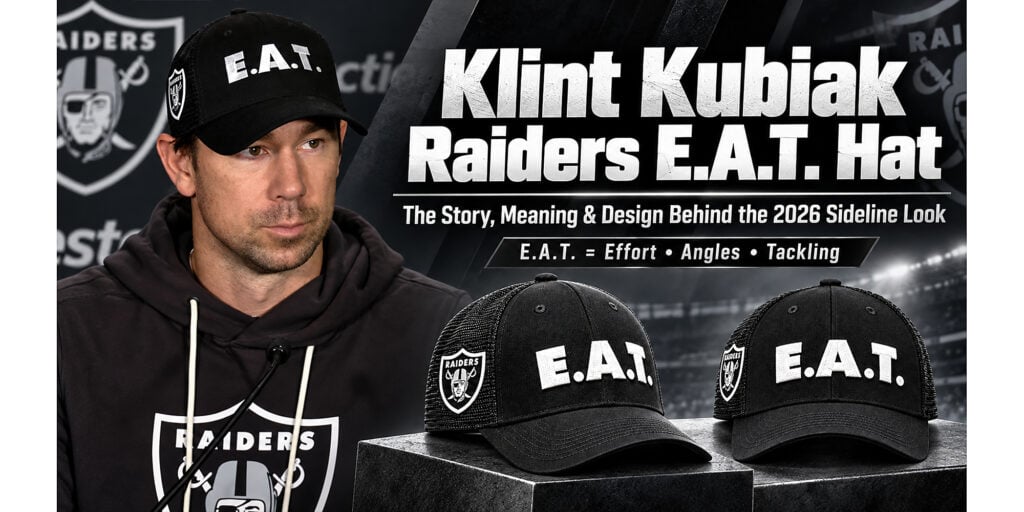
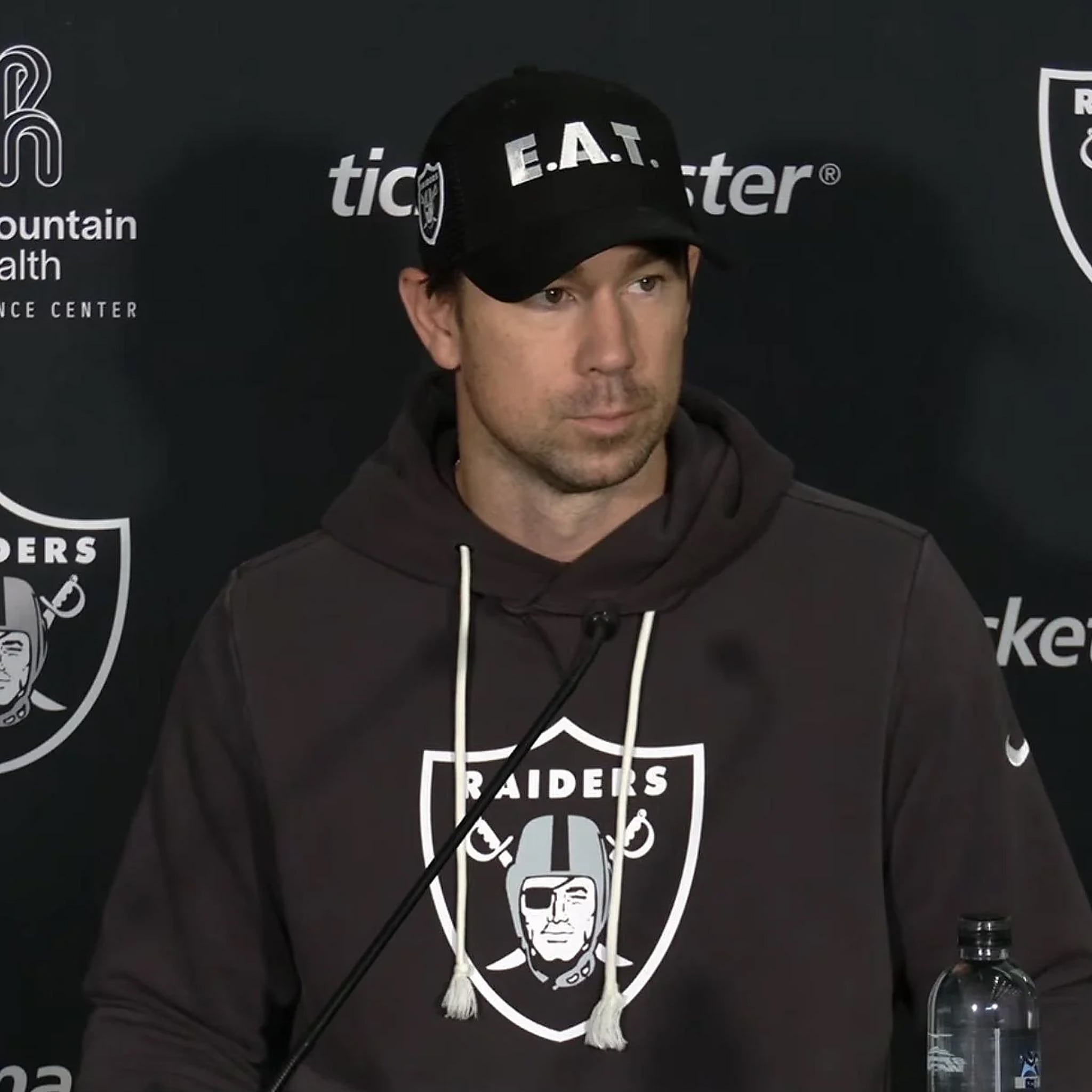
When Las Vegas Raiders head coach Klint Kubiak sat down for his Wednesday press conference on October 7, 2026, one detail pulled attention away from the game plan. A black cap sat low on his brow, with three letters in bold type across the front: E.A.T. Within hours, Raiders fans and football followers were asking the same question. What does it stand for, and where did it come from?
The answer says a lot about Kubiak’s coaching philosophy and the culture he carried from Seattle to Nevada. This guide covers the story behind the Klint Kubiak Las Vegas Raiders EAT 2026 Hat, the meaning of the acronym, a closer look at the design, and who this kind of fan cap suits best.
Quick Answer: What Is the Klint Kubiak Raiders EAT Hat?
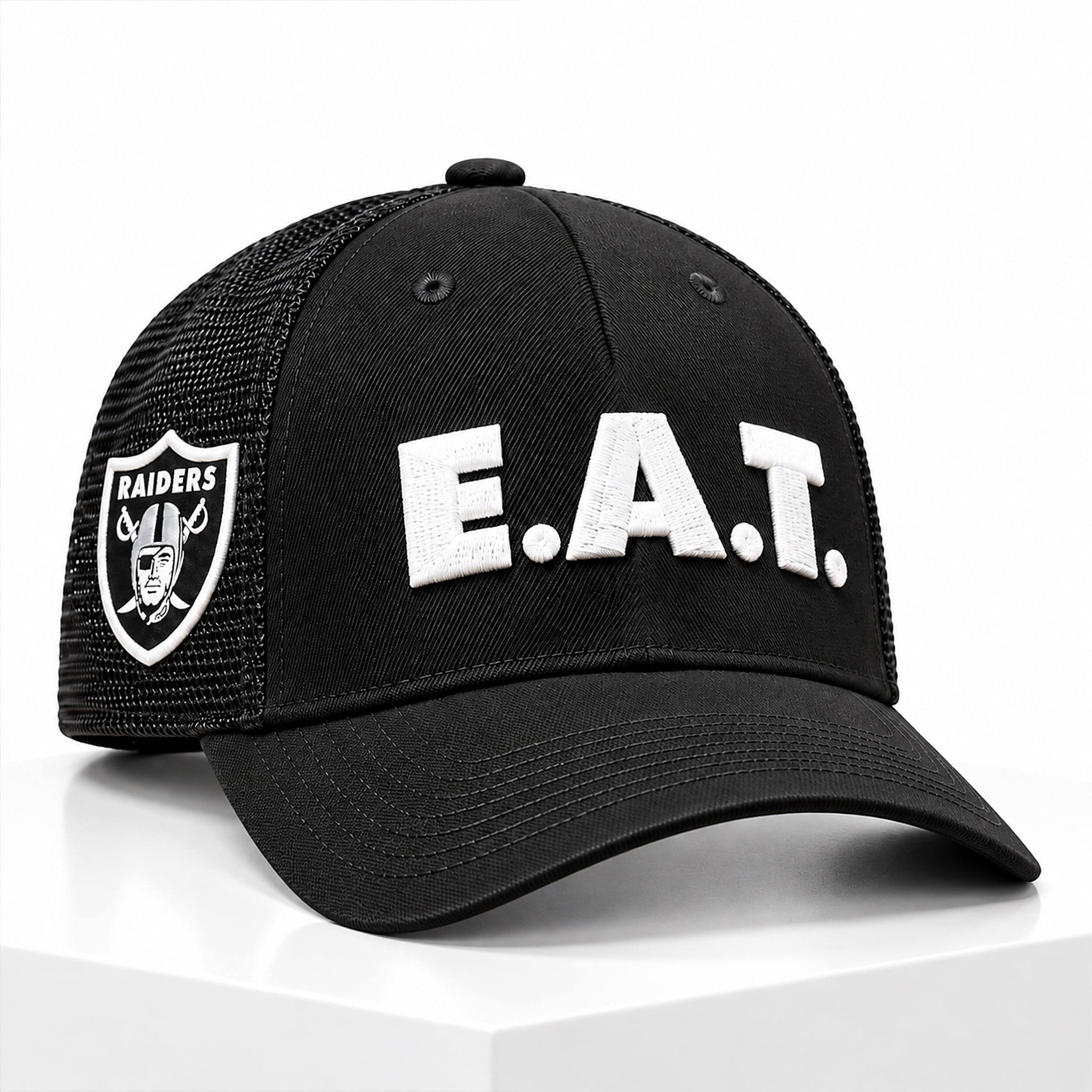
The Klint Kubiak EAT Hat is a black baseball-style cap inspired by the one the Raiders’ first-year head coach wore at a midweek press conference in October 2026. It features large white block lettering that reads “E.A.T.” with a period after each letter, plus a Raiders shield on the side. The letters stand for Effort, Angles, and Tackling, a mantra Kubiak brought with him from the Seattle Seahawks’ Super Bowl-winning staff.
In short, it is a simple, bold football cap with a message you can explain in three words.
When and Where Did Kubiak Wear the E.A.T. Cap?
Kubiak wore the cap on Wednesday, October 7, 2026, during his weekly media session. Raiders head coach pressers are held at the team’s headquarters in Henderson, Nevada, the same Intermountain Health Performance Center where he was introduced as head coach on February 10, 2026.
The timing is part of why it landed. The Raiders had opened the season 3-0, then lost a close Week 4 game to the Kansas City Chiefs, 30-27. In that setting, a cap that spelled out a fundamentals-first philosophy felt less like a fashion choice and more like a statement of identity. Reports afterward noted that Kubiak seemed to realize only in the moment that he had it on, which made the moment feel unscripted.
What Does E.A.T. Stand For?
E.A.T. stands for Effort, Angles, and Tackling. Each word points at a basic football skill that does not depend on raw talent.
- Effort is how hard a player runs, blocks, and finishes every snap.
- Angles are the paths players take to the ball carrier, so a play gets stopped rather than missed.
- Tackling is the act of finishing the play and bringing the runner down.
Kubiak has described the idea as the things a team can control: how it blocks, how it tackles, and the details that take commitment rather than a special gift. That is an easy message for a fan to like, because anyone can understand and respect it.
Where the Acronym Came From
The phrase comes from Seattle. Seahawks head coach Mike Macdonald explained late last season that it began on the defensive side of the ball and was later extended to the offense. According to Macdonald, run game coordinator Chris Partridge came up with it. Over time it became a way of life for that team and a rallying cry for finishing plays.
That matters because Kubiak was Seattle’s offensive coordinator during a season that ended with a Super Bowl LX win over the New England Patriots, 29-13, on February 8, 2026. Two days later he was introduced in Las Vegas. When the cap appeared in Henderson, fans saw a thread running from that championship staff to the Raiders’ new era.
How It Fits Kubiak’s Message in Las Vegas
The cap also lines up with what Kubiak has said since his first day on the job. At his introductory press conference, he talked about a physical, aggressive style built on effort and about earning trust through actions rather than speeches. He described the team’s film as its “silent tape,” meaning that what players do on the field says more than any slogan. He also said he wanted coaches who teach and a defense that plays hard.
Against that backdrop, E.A.T. works as a compact version of his message. For a franchise that finished 3-14 in 2025 and has changed coaches often in recent years, a plain-spoken, work-first motto is easy to get behind.
Design Breakdown: What the Cap Looks Like
The strength of this design is restraint. It has very few elements, and each one has a job.
The Lettering
The front of the cap carries “E.A.T.” in thick, white, all-capital block letters. The periods are deliberate: they mark the letters as an acronym, which hints that there is a meaning behind it. In a crowd, the high-contrast white on black reads from a distance.
The Raiders Shield
On the side sits the Raiders shield, with the eye-patched helmeted figure and crossed swords that Raider Nation recognizes immediately. Placing it on the side keeps the front clean for the lettering while still telling people whose team you support.
The Black-and-White Palette
The cap uses only black and white, which echoes the Silver and Black tradition without needing extra colors. That makes it easy to pair with other team gear, from hoodies to jerseys, and it keeps the focus on the message.
Taken together, the design feels like a locker-room reminder turned into a fan cap: direct, confident, and a little understated.
Who Is This Cap For?
This cap suits several kinds of buyers:
- Raiders fans who are following Kubiak’s first season and want gear tied to a current storyline rather than a generic logo.
- Football fans who like coaching culture, including people who enjoy the stories behind mottos, playbooks, and sideline habits.
- Seahawks supporters who remember the E.A.T. mantra from the Super Bowl run and appreciate how it traveled.
- Collectors of press-conference moments, who like apparel connected to a specific date, person, and place.
- Gift buyers looking for something more specific than a standard team cap for a football fan in their life.
If you simply want a clean black cap with a team shield, it works for that too. The story is a bonus rather than a requirement.
Why This Cap Stands Out
It has a real story. Many fan caps rely only on a logo. This one is tied to a dated moment, a named coach, and a documented origin. When someone asks about it, you have an answer ready.
The message is positive and universal. Effort, angles, and tackling are values that apply well beyond football. A fan who coaches youth sports, works a physically demanding job, or just respects fundamentals can connect with it.
It starts conversations. Three letters with periods invite the question “What does that stand for?” That makes it a natural icebreaker at tailgates, bars, and watch parties.
It is timely without being dated. The cap is rooted in Kubiak’s first season, but the E.A.T. idea stands on its own. It can keep its meaning for fans who want to remember the start of this era.
Styling and Wearing Ideas
Because the cap is black with white lettering, it fits easily into most casual outfits.
- Game day: Wear it with a black or gray hoodie, similar to the sideline look the coach himself favors, and add a Raiders jersey or shirt if you want a full fan outfit.
- Tailgates and watch parties: The bold lettering is easy to spot in a crowd, and the cap works in both cool and warm weather.
- Everyday wear: Pair it with a plain tee, denim, and sneakers. The neutral palette keeps it from feeling like costume.
- Travel days: Fly out for a road game or a Las Vegas weekend and let the cap signal your team allegiance without a lot of extra gear.
A simple tip: let the cap be the statement. With a plain top underneath, the E.A.T. lettering does the talking.
Frequently Asked Questions
What does E.A.T. stand for on Klint Kubiak’s hat?
It stands for Effort, Angles, and Tackling. The acronym came from the Seattle Seahawks’ staff, where it began on defense and spread to offense, and Kubiak brought it to the Raiders.
When did Klint Kubiak wear the E.A.T. cap?
He wore it at his Wednesday press conference on October 7, 2026, at the Raiders’ headquarters in Henderson, Nevada.
Who came up with the E.A.T. acronym?
According to Seahawks head coach Mike Macdonald, run game coordinator Chris Partridge came up with it. Macdonald has described it as something that became a way of life and a rallying cry for finishing plays.
Why did the E.A.T. cap become a talking point?
It combined a recognizable coach, a mysterious three-letter message, and a Super Bowl connection. Fans wanted to know the meaning, and the story behind it was easy to share.
Is the E.A.T. concept only about defense?
No. It began on defense, but Macdonald has said it was extended to the offense as well. Kubiak ran an offense in Seattle and now leads the whole Raiders team, so the idea applies across the roster.
Where to Buy the Klint Kubiak Raiders EAT Hat
If you want the cap for yourself or as a gift, you can find it on the Klint Kubiak Wearing Raiders EAT Hat product page at Grishko, where the photos show the front lettering and the side shield from several angles. Grishko sells apparel only and does not sell event tickets, so look elsewhere if you are planning a trip to a game.
Before you order, check the product page for current sizing and shipping details, since those can change.
Conclusion
The hat captures a small but memorable moment from the Raiders’ 2026 season: a first-year head coach, a Wednesday press conference in Henderson, and three letters that explain a whole philosophy. E.A.T. means Effort, Angles, and Tackling, a mantra from Seattle’s Super Bowl-winning staff that now follows Kubiak into Las Vegas.
The design keeps things simple with white block lettering, a Raiders shield, and a black-and-white palette that fits Raider Nation. It suits fans, collectors, and gift buyers who want a cap with a story rather than just a logo. If the idea of effort-first football resonates with you, this is a straightforward way to show it.
